
Obstacle Course Race Medical Planning: From Course Design to Emergency Response
Key Takeaways
- •38% of OCR injuries requiring hospital transport come from obstacles with fall heights above four feet
- •Medical resources should be distributed across the course using a three-tier system, not clustered at the start/finish
- •12% of participants with open wounds during mud obstacles develop infections within 7 days
- •Per-participant accident protection at $10-$15 per registration covers medical bills that waivers cannot
- •Every course point must be reachable by ATV within 5 minutes for spinal injury transport
Her Arm Is Bent the Wrong Way and Your Ambulance Is Twelve Minutes Out
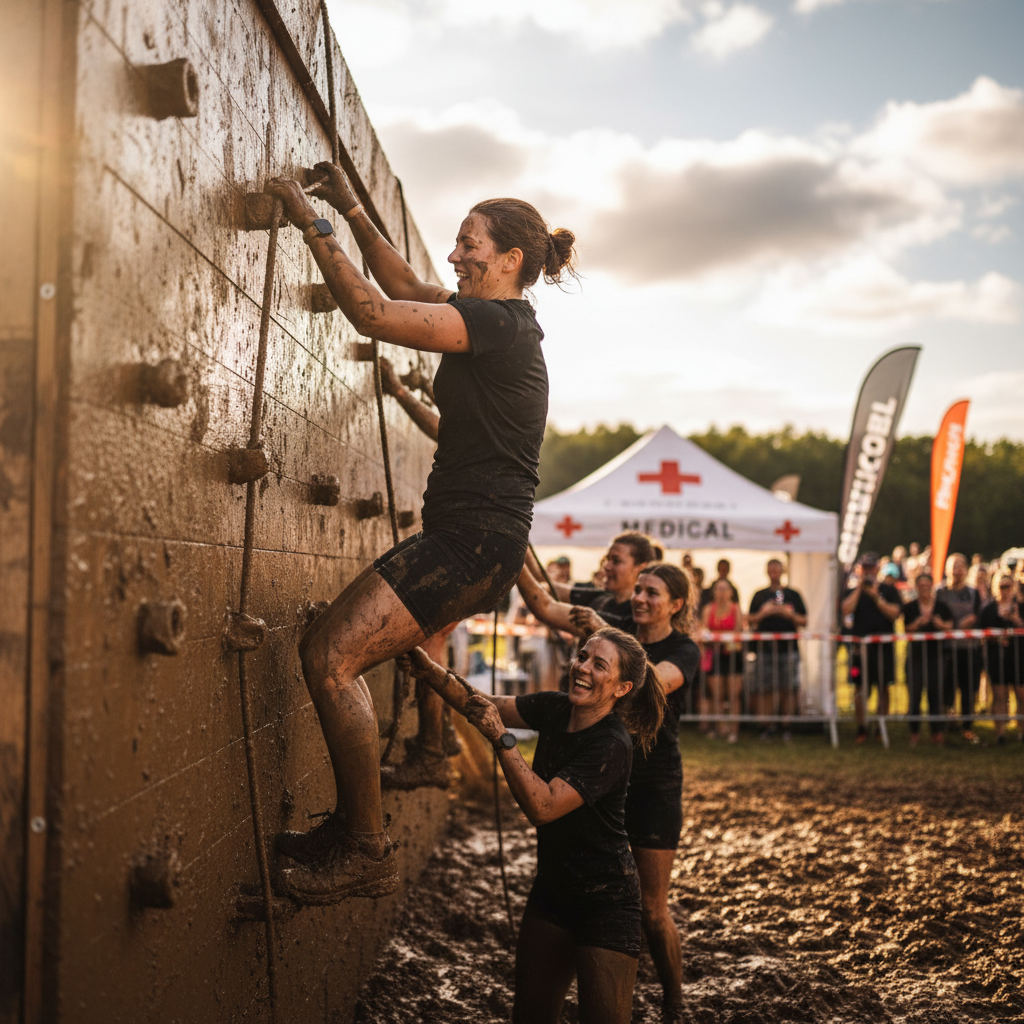
Mile 3. Obstacle 7. She went over the eight-foot wall, misjudged the drop, and crumpled into the dirt on the other side. Her right forearm is at an angle that arms do not make naturally. Your nearest volunteer is standing there with a walkie-talkie and a bag of ice. The ambulance? Parked at the start/finish line, on the other side of twelve minutes of rough terrain.
This is obstacle course racing medical planning. Nothing works the way it does for a standard road race.
A 10K has predictable injuries -- blisters, dehydration, a rolled ankle. Access points every half mile. An ambulance can reach any runner in minutes. OCR obliterates every one of those assumptions. You're combining running with wall climbs, mud crawls, heavy carries, cold water crossings, and sometimes fire. The injury spectrum spans lacerations to hypothermia to near-drowning. Spartan Race and Tough Mudder employ full-time medical directors. If you're organizing a smaller event, you need the same level of planning.
Each Obstacle Is Telling You Exactly Where Someone Will Get Hurt
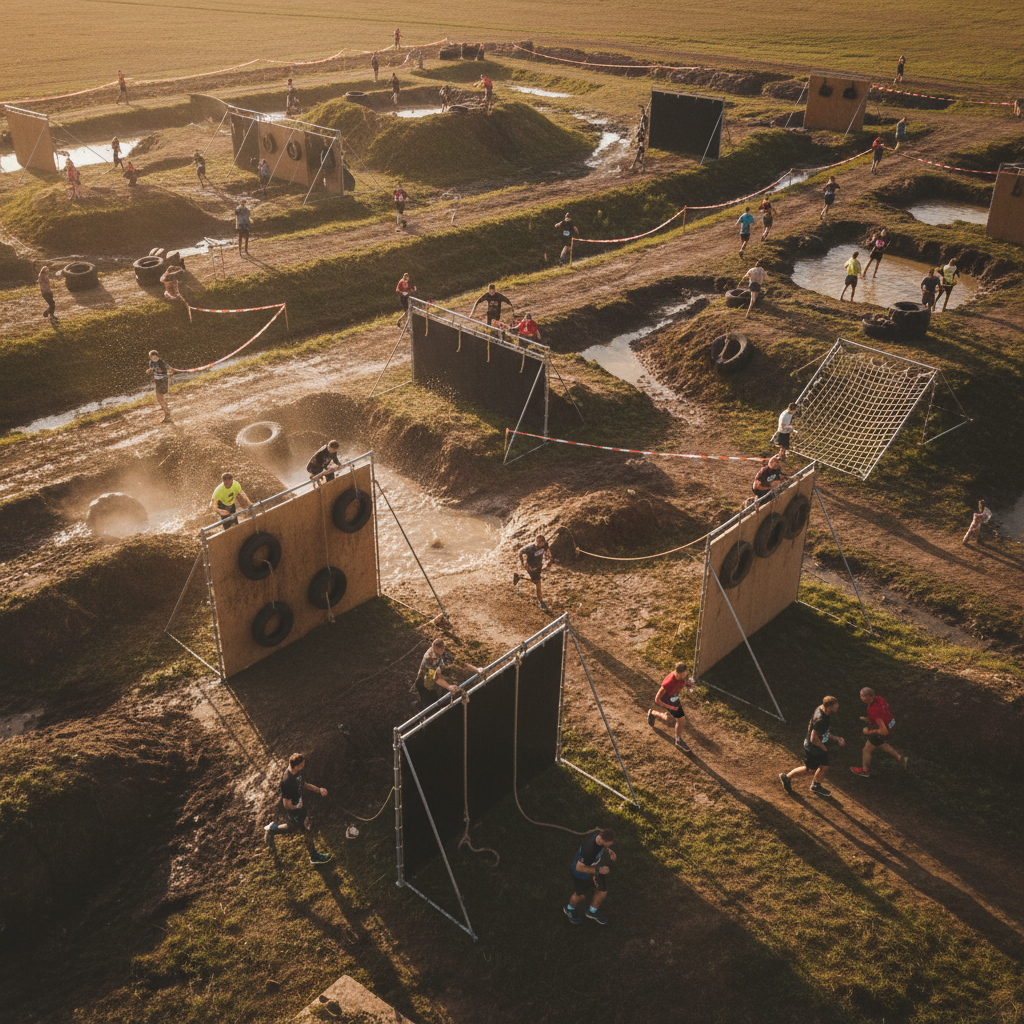
Stop guessing. Every obstacle type produces a signature injury pattern. Know the pattern and you know precisely where to station your medical resources.
Walls, Rope Climbs, Monkey Bars: Your Worst-Case Machines
Fractures. Dislocations. Concussions. Spinal injuries. Data from the Obstacle Course Racing Safety Consortium is unambiguous: 38% of OCR injuries requiring hospital transport originate from obstacles with a fall height greater than four feet.
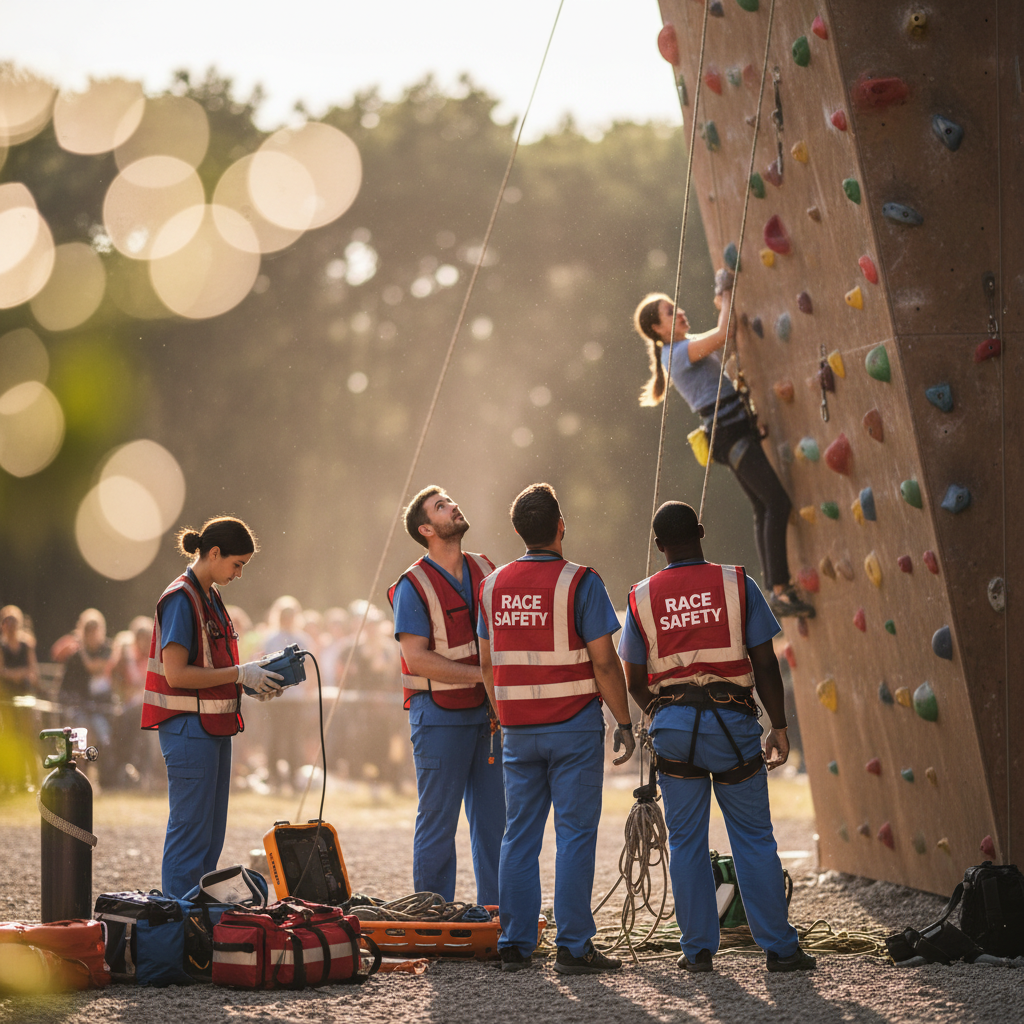
Station a trained responder with spinal immobilization equipment at every obstacle above that height. No exceptions. Landing zones must be clear with adequate padding or loose material to absorb impact.
Water and Mud: Two Dangers in One Disguise
Danger one: drowning. Even shallow water turns lethal when an exhausted athlete face-plants into a mud pit. Danger two: infection. Mud is teeming with bacteria, and the open wounds from earlier obstacles are direct entry points.
Water safety personnel -- lifeguards or swiftwater rescue trained -- at every water obstacle. Wound cleaning stations at the first dry checkpoint after any mud section. Post-race communications must include infection warning signs.
Carry and Drag Obstacles
Sandbag carries, sled pulls, log hauls. These produce muscle strains, back injuries, and hernias that often don't surface until after the participant crosses the finish line. Place spotters who intervene on dangerous form. Offer weight options so participants can self-select appropriate loads.
Electric Shock and Fire: The Specialty Risk Universe
If your course includes these, you've entered different territory entirely. Electric shock obstacles have generated multiple lawsuits. Fire requires dedicated burn response capability. Many OCR underwriters now demand separate riders -- or refuse to cover events that include them at all.
The Most Expensive Mistake: Putting All Your Medics in One Place
Here's the thing. The most common error in OCR medical planning is clustering medical resources at the start/finish area. That's where the spectators are. It is not where the injuries happen.
The Three-Tier System
Tier 1: On-Course Medical Points
First aid volunteers or EMTs at high-risk obstacles. Immediate assessment, wound cleaning, splinting, triage calls. Basic kit: bandages, splints, cold packs, wound irrigation, radio. Minimum ratio: one medical point per 4 to 6 obstacles, with dedicated coverage at every high-fall and water obstacle.
Tier 2: Field Medical Stations
Two to three larger stations at strategic positions, each ATV-accessible. Handle suspected fractures, lacerations needing closure, hypothermia, transport triage. Staff with EMTs or paramedics carrying cervical collars, backboards, IV supplies, AEDs, warming gear.
Tier 3: Main Medical Tent
At the finish area. Your most equipped station: delayed-onset injuries, severe dehydration, rhabdomyolysis screening, hospital transport coordination. At least one paramedic, plus an event physician for races over 500 participants.
Safety Starts at the Design Table, Not the Medical Tent
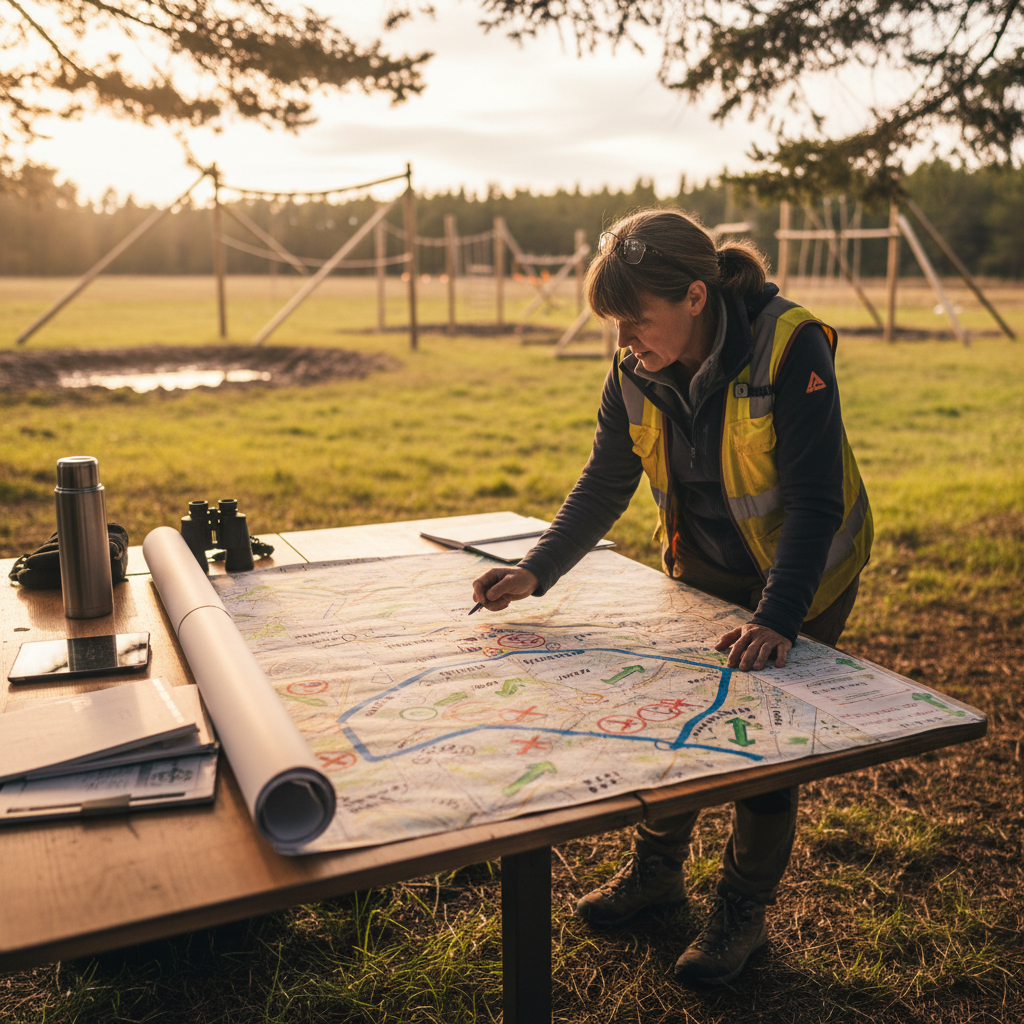
Your course designer and medical director should be in the same room from day one. Not meeting afterward. Not reviewing each other's work. In the same room, at the same table, from the first sketch.
The Five-Minute Rule
Every point on your course must be reachable by ATV within five minutes. Period. If a section requires fifteen minutes of hiking, redesign the layout. A spinal injury cannot wait for a crew hauling a backboard through rough terrain on foot.
Sequencing That Prevents the Worst Injuries
Never stack a high-skill obstacle directly after a high-fatigue one. Athletes who just hauled a 60-pound sandbag uphill for 200 meters should not face monkey bars over water next. Fatigued grip plus height plus water is a formula for disaster. Build 200 to 400 meters of easy running between high-risk elements.
Bypass Lanes Aren't Soft -- They're Smart
Every obstacle needs a bypass option. Someone with a minor injury from an earlier obstacle, or someone who recognizes a challenge exceeds their ability, should be able to continue without creating a medical emergency. This isn't about softening the race. It's about preventing avoidable evacuations.
The Infection Timebomb Hiding in Your Mud Pits
Here's the risk most OCR organizers underestimate until it becomes a headline. A 2023 study in the Journal of Wilderness and Environmental Medicine found that 12% of participants with open wounds during mud obstacles developed infections within 7 days. Three percent required antibiotics. Nearly half a percent were hospitalized.
Cellulitis. MRSA. Leptospirosis. In rare cases, necrotizing fasciitis. Your liability as an organizer extends to providing adequate warning and prevention.
Five Moves That Reduce Infection Claims
- Pre-race communication: Instruct participants to cover open wounds before the race and clean all wounds thoroughly after
- Wound stations: Clean water rinse stations at the first checkpoint after every mud obstacle
- Post-race cleanup: Adequate clean water for a full-body rinse at the finish
- Follow-up email within 24 hours: Infection warning signs -- redness spreading from a wound, increasing pain, fever, red streaks
- Water testing: Test standing water obstacles for coliform bacteria before race day. Elevated levels mean drain, treat, refill
Staffing Numbers That Keep People Alive
Guidelines from the American College of Emergency Physicians, adapted for OCR terrain:
- Under 500 participants: 2 EMTs on course, 1 paramedic at finish tent, 4 to 6 first aid volunteers at obstacles
- 500 to 2,000: 4 EMTs on course, 2 paramedics, 1 event physician, 8 to 12 first aid volunteers
- Over 2,000: 6 EMTs, 3 paramedics, 1 physician, dedicated ambulance on standby, 15+ first aid volunteers
These are floors, not ceilings. A race in 95-degree heat needs significantly more capability than the same course at 65 degrees.
Your Waiver Needs Teeth
Generic waivers are tissue paper in OCR litigation. Yours must enumerate specific hazards: falls from height, drowning, electrocution (if applicable), lacerations, waterborne bacteria exposure, heavy lifting injuries. Require participants to self-certify fitness and disclose medical conditions. You're not providing clearance -- you're ensuring informed decisions.
The Coverage That Determines Whether Your Event Survives
OCR events sit in the highest risk tier for event insurance. Standard policies often exclude obstacle course activities entirely.
But wait. When a participant breaks a collarbone on a wall climb, their medical bills can clear $12,000. Without accident coverage, they're stuck with that bill despite signing a waiver. That path leads to lawsuits, negative press, and community backlash that kills your event permanently.
Build accident protection into your registration fee. An additional $10 to $15 per participant signals a professional, safety-first operation. Market it: "All participants covered by accident protection."
Race Day Communications: The Protocol That Saves Lives
- Dedicated radio channel for medical only, separate from operations
- Clear code system: Green (minor, handled on course), Yellow (needs field station), Red (possible hospital transport)
- Central medical coordinator at the main tent tracking all incidents and allocating resources in real time
- Hospital pre-notification: Alert the nearest ED before the start gun with participant count and expected injury types
- 48-hour debrief: Review every medical incident. Document what worked, what failed, what changes the next event plan
One serious incident handled poorly shuts down an OCR series forever. One serious incident handled well -- rapid response, proper coverage for the athlete -- builds the reputation that fills your next registration in hours. The medical plan isn't overhead. It's the foundation everything else stands on.
Written by
Race Event Consultant
Derek advises race directors on insurance, liability, and participant safety. Having directed dozens of events himself, he brings practical knowledge of what race organizers face on the ground — from permitting to post-race claims.
View all articles →Related Articles
Why you might like these

Bouldering Gym Risk Management: The Complete Guide to Pad-Only Climbing Safety
Bouldering gyms face unique liability challenges because falls aren't accidents -- they're expected. Here's how to manage risk when there are no ropes to catch anyone.

Essential Safety Protocols Every Boutique Fitness Studio Needs
Boutique studios offer high-intensity workouts in intimate settings. That means higher injury risk. Here's your safety protocol checklist.
The Guide Service Liability Checklist: 12 Things to Check Before Every Trip
Running adventure tours means managing risk in unpredictable environments. This checklist ensures you've covered the essentials before every trip.