Zip Line Tour Safety & Compliance: Meeting ACCT Standards Without Breaking the Budget
Key Takeaways
- •ACCT standards are effectively mandatory because insurers require them for coverage
- •Annual inspections by certified PVMs cost $3,000-$8,000 and are non-negotiable
- •Continuous belay systems can earn 15-25% insurance premium discounts
- •Per-participant accident protection at $1–$3/walk-in closes the medical expense gap
- •Total annual compliance costs run $42,000-$76,000 for a mid-sized operation
The Word "Voluntary" Is About to Cost You Everything
The Association for Challenge Course Technology (ACCT) publishes the standards that govern every zip line and aerial adventure operation in the country. Technically, they're voluntary. No federal agency mandates them. You could ignore every page.
Here's the thing. Your insurance carrier doesn't see it that way. If a rider gets hurt and an investigation reveals you weren't following ACCT standards, your insurer can deny the claim outright. Your defense attorney will have one hand tied behind their back in court. And the plaintiff's lawyer? They'll wave those standards like a flag.
It gets worse. Following several high-profile zip line fatalities between 2019 and 2024, at least 14 states have adopted or are drafting legislation that references ACCT standards directly. Voluntary today. Required tomorrow. The writing isn't just on the wall -- it's in the legislative record.

What the 10th Edition Actually Demands
ACCT standards (10th Edition, published 2023) span from initial design to the daily checklist your guides run before the first tour. Here's what matters most.
Design and Installation: No Room for Improvisation
Every zip line must be designed by a qualified engineer -- and "qualified" doesn't mean someone who designs office buildings. It means specific experience with challenge course and zip line systems. Key requirements include:
- Cable strength rated at minimum 6x the maximum anticipated load
- Arrival systems that safely decelerate riders at maximum anticipated speed
- Redundant connection points at every platform and transition
- Hazard-free clear zones below and around all zip lines
- Platform structural integrity rated for max occupancy plus safety factor
The Three-Tier Inspection Gauntlet
This is where budgets start to sweat. ACCT requires three distinct layers of inspection:
- Pre-use inspection (daily): Visual and tactile check of all cables, connections, platforms, harnesses, and landing areas before tour one. Document everything in writing.
- Periodic inspection (use-based): Deeper assessment of wear points, corrosion, cable condition, structural connections. High-volume operations should do this weekly.
- Annual inspection by an ACCT-certified PVM: Comprehensive review including non-destructive cable testing, structural assessment of platforms and anchors, and full operational procedure audit.
Annual inspections run $3,000-$8,000 depending on course size and complexity. Non-negotiable. Your insurer will ask for the report, and "we skipped it this year" is not an answer.
The Last Line Between Your Guest and the Ground
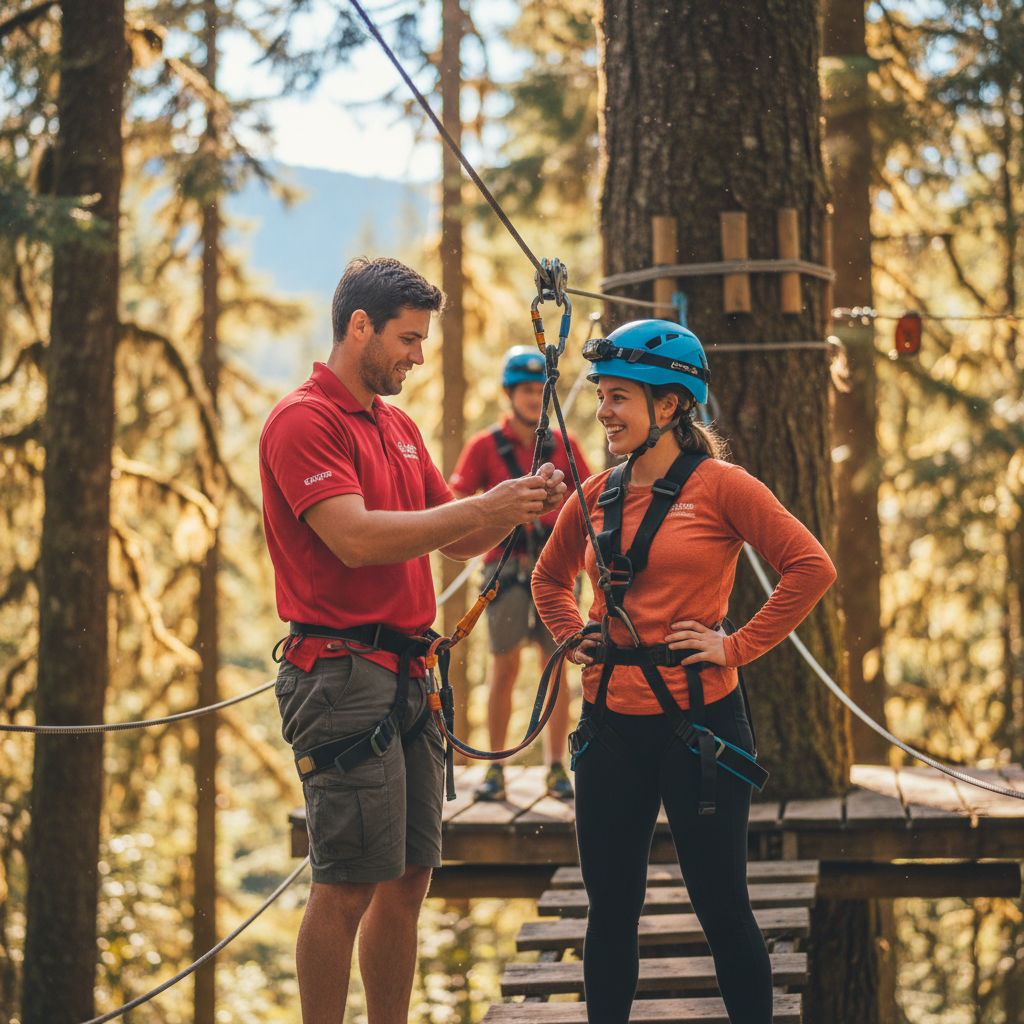
Harness systems don't get a second chance to work. ACCT standards are specific about what protects your riders.
Harness Requirements
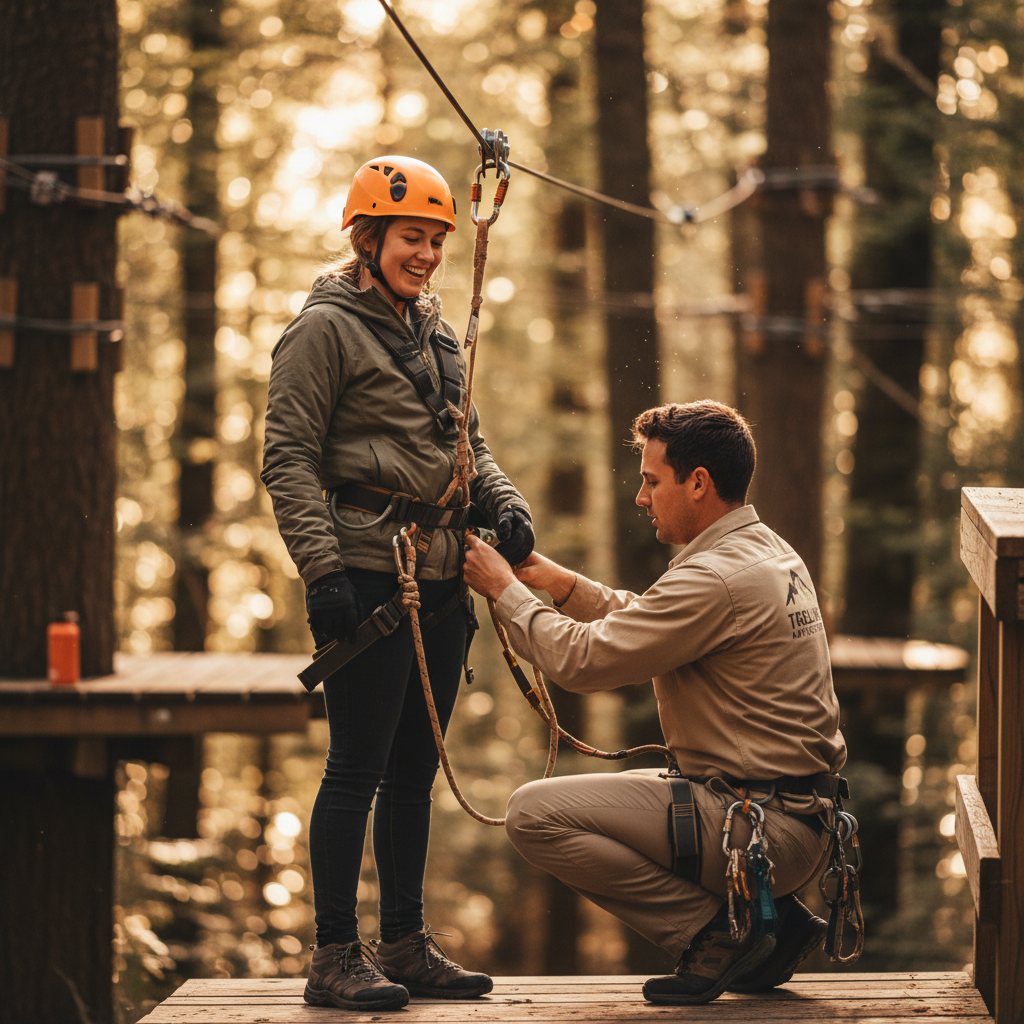
- Full body harness with sit strap for zip lines (chest harness alone is insufficient)
- Dual attachment points for continuous belay systems
- Manufacturer-rated for the maximum rider weight you allow
- Daily inspection for wear, fraying, stitching integrity, and hardware function
- Retirement schedule per manufacturer guidelines (typically 3-5 years or sooner based on use)
Continuous Belay: The Upgrade That Pays for Itself
Modern aerial parks increasingly use continuous belay systems -- riders stay connected at all times and physically cannot disconnect mid-course. Systems from Bornack, Edelrid, or Kanopeo run $50,000-$150,000 for a full course.
Expensive? Yes. But wait. Several insurers now offer 15-25% premium discounts for operations running certified continuous belay. On a $30,000 annual premium, that's $4,500-$7,500 back in your pocket every year -- while eliminating the single most catastrophic risk category.
The Conversation Nobody Wants to Have
Weight limits on zip lines aren't suggestions. They're engineering constraints calculated from cable strength, braking capacity, platform structural limits, and trolley specifications. Exceeding them doesn't just increase risk -- it creates catastrophic failure potential.
But enforcing weight limits means having an uncomfortable conversation with paying customers. Best practices that preserve both safety and dignity:
- Publish weight limits clearly on your website, booking confirmation, and at check-in
- Use a private weigh-in process (not a public scale at the check-in counter)
- Train staff to handle the conversation with genuine empathy
- Offer an immediate full refund when someone can't participate
- Document that the weight check was performed for every participant, every tour
Never allow a participant to exceed the rated limit. Never. The legal and moral consequences of a structural failure are beyond any number you can write down.
Your Staff Need More Than a One-Day Orientation
ACCT requires all zip line staff to be trained and assessed to a specific standard. This is not "watch a video and sign a form."
Required Qualifications
- Level 1 Practitioner: Operates elements under direct supervision. Requires 40+ hours of training.
- Level 2 Practitioner: Operates independently and supervises Level 1 staff. Additional training plus demonstrated competency.
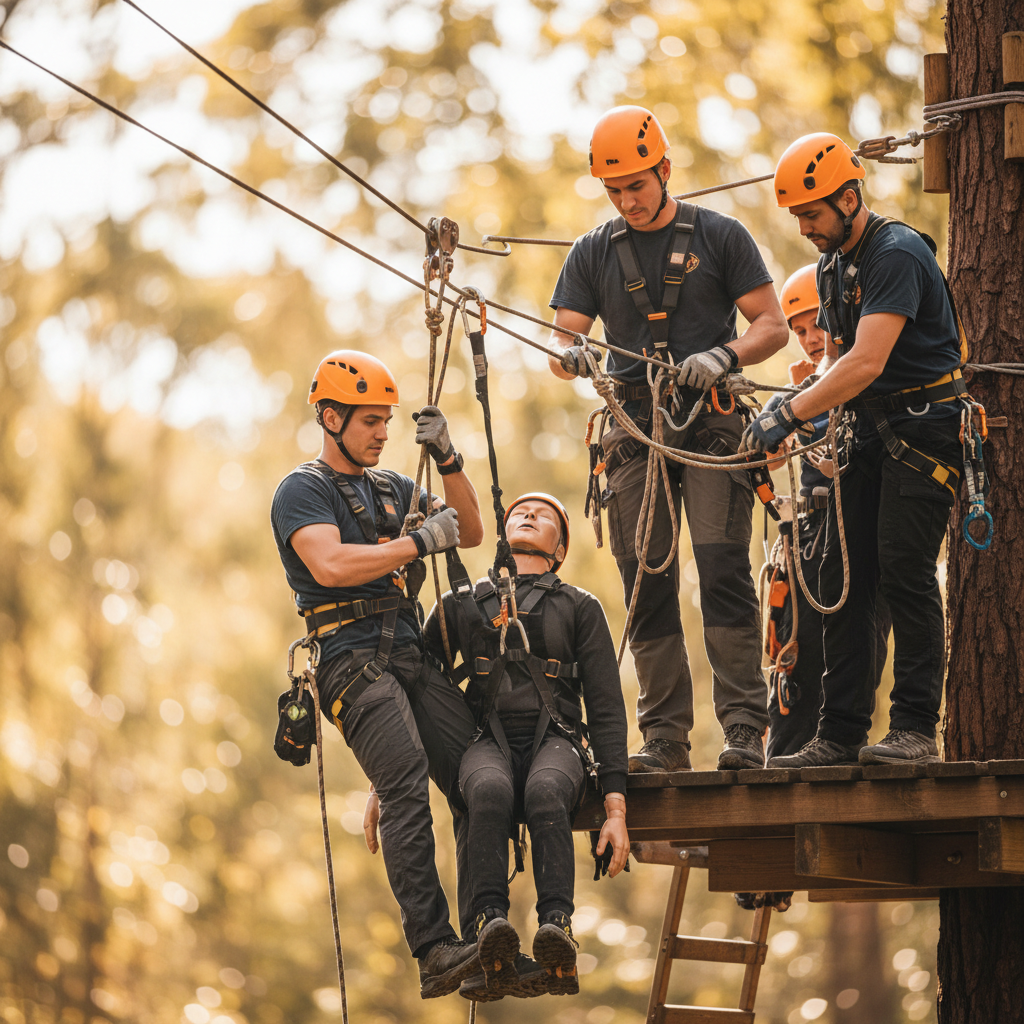
- Rescue competency: Every staff member trained in rescue procedures for every element. Suspended participant rescue demands specialized equipment and regular practice.
- First Aid/CPR: At least one currently certified staff member present during all operations.
Budget $2,000-$4,000 per staff member for initial certification, plus $800-$1,500 annually for refresher training and rescue drills.
Rescue Drills: Prove It Before You Need It
ACCT requires documented rescue capability for every element. Your team must demonstrate they can reach and lower a stranded rider from any point on the course within 10-15 minutes.
Run drills quarterly. Document with photos, time stamps, and participant notes. Your insurer will want this file -- and they'll want it current.
What Insurance Companies Are Really Looking For
Zip line insurance is a specialty market. Not every carrier writes it. The ones who do have a very specific checklist:
- Current annual PVM inspection report
- Documented staff training records
- Written operating procedures and emergency action plans
- Maintenance logs for all equipment
- Claims history
- Continuous belay system (increasingly the dividing line between "preferred" and "declined")
General liability premiums for zip line operations run $15,000-$40,000 per year depending on elements, volume, and history. That covers your business when someone sues. What it does not cover: participant medical expenses. A sprained ankle stepping off a platform, a friction burn from a harness -- your liability policy stays silent unless the guest proves negligence.
The $5 Fix for Your Reputation Problem
Minor injuries happen on even the best-run courses. Bruises. Friction burns. Tweaked ankles on platform steps. These aren't negligence -- they're inherent to strapping humans into harnesses and sending them through trees at 40 miles per hour.
But the guest doesn't care about the legal distinction. They care about the $2,800 ER bill sitting in their mailbox two weeks after their "adventure of a lifetime."
Per-participant accident protection at $1–$3 per walk-in covers medical expenses from activity-related injuries. Build it into your tour price: "All tours include accident protection for every participant." Guests see premium value. You dodge the angry phone call, the one-star review, the demand letter from a personal injury attorney. At $80-$150 per person for the tour, the protection cost is invisible.
The Real Cost of Doing This Right
Imagine opening next season with full ACCT compliance locked in. Here's what a mid-sized operation (6-8 elements, 15,000 annual participants) should budget:
- Annual inspection: $4,000-$6,000
- Staff training and certification: $8,000-$15,000 (depending on turnover)
- Equipment replacement and maintenance: $10,000-$20,000
- Insurance premiums: $20,000-$35,000
- Participant accident protection: $75,000-$150,000 (recovered through tour pricing)
Total: roughly $42,000-$76,000 per year in direct compliance costs, excluding accident protection which passes through to your pricing.
Is it expensive? Absolutely. Is it cheaper than a wrongful death lawsuit? By orders of magnitude. The operations that invest in proper compliance are the ones still running tours a decade from now. The ones that cut corners? They become cautionary tales at industry conferences.
Written by
Adventure Sports Editor
Taylor covers risk management for adventure guide services and outdoor recreation businesses. From rafting outfitters to zip line operators, Taylor helps adventure business owners navigate the liability landscape without slowing down.
View all articles →Related Articles
Why you might like these

Waivers Are Not Insurance: The Legal Protection Guide for Activity-Based Businesses
Liability waivers and insurance serve completely different functions. Most business owners conflate them, creating dangerous gaps in their legal and financial protection.

Running Race Participant Insurance: What Race Directors Need to Know
Hosting a running race means taking on significant liability. Here's how to protect your participants, your organization, and your budget.

Youth Climbing Programs: A Complete Liability Guide for Gym Owners
Running youth climbing programs is incredibly rewarding—and comes with unique liability concerns. Here's how to protect your gym, your staff, and the kids.