

Pilates Reformer Studio Insurance: Why Equipment-Based Classes Need Special Coverage
Key Takeaways
- •Standard fitness insurance often excludes spring-loaded mechanical equipment like reformers
- •Reformer studios need three insurance layers: general liability with equipment riders, professional liability, and participant accident protection
- •Equipment-based Pilates injuries are 2.7x more likely to require medical intervention than mat injuries
- •Documented equipment maintenance logs are your strongest defense in liability claims
You Hear the Ping Before You Hear the Scream
It's 7:15 AM. Your first client is three reps into footwork on the reformer. Then comes that sound -- a sharp metallic snap, like a guitar string giving way under too much tension. Because that's exactly what just happened. A red spring broke under load.
Your client is clutching her shoulder. Your front desk person is frozen mid-sip of coffee. And somewhere in the reptilian part of your brain, a question surfaces that should have been answered months ago: does your insurance policy even know what a reformer is?
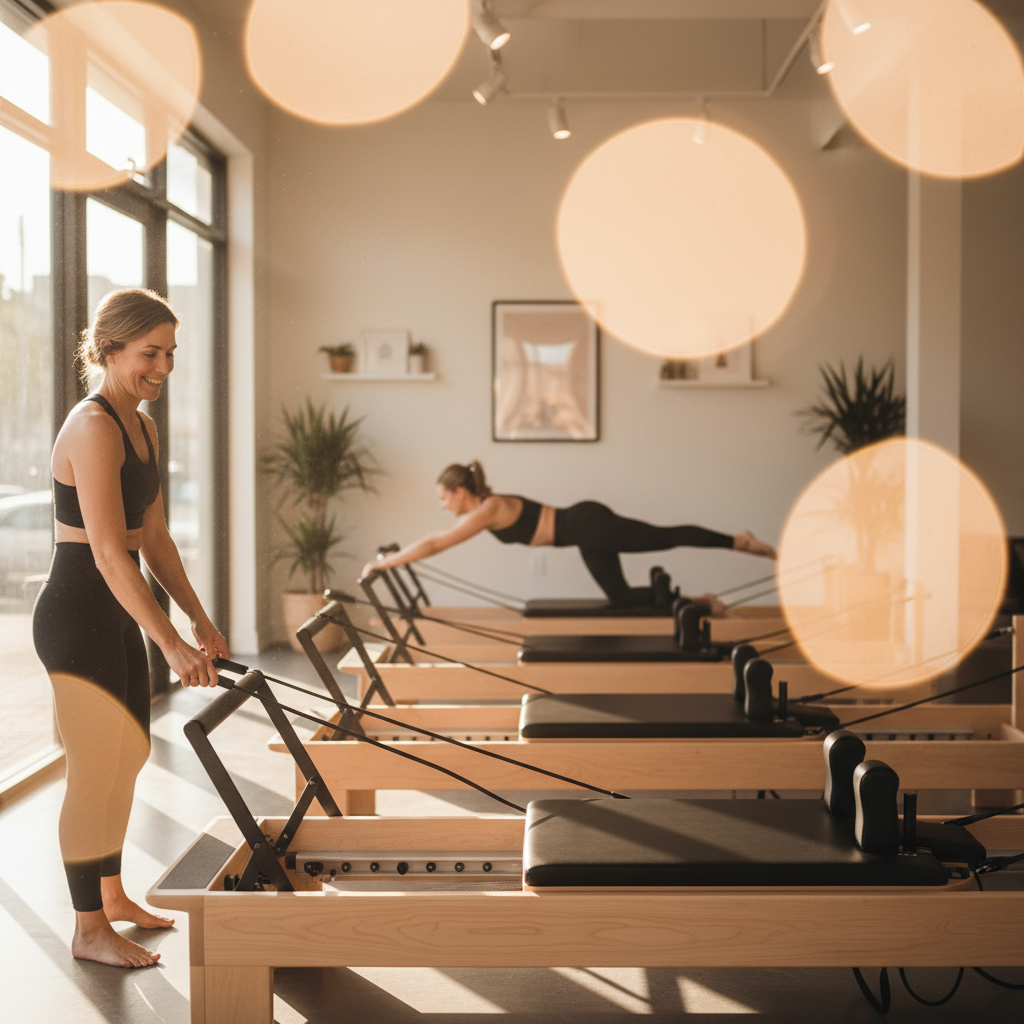
It had better. Club Pilates runs over 850 locations. Independent reformer studios are opening at twice the rate of mat-only spaces. Each machine costs $5,000 to $12,000. And all that spring-loaded, carriage-sliding, strap-tensioned equipment creates a liability profile your standard fitness policy was never designed to touch.
Why Your General Liability Policy Is Quietly Failing You
Most studio owners buy general liability and sleep well. For a vinyasa studio where the biggest risk is someone slipping on a sweaty mat? Fine. GL handles slip-and-fall, basic premises claims, garden-variety negligence.
But reformers are mechanical devices. Adjustable springs. Sliding carriages. Foot straps. Hand loops. When they fail, the injuries aren't pulled hamstrings. They're torn rotator cuffs, crushed fingers, and hyperextended knees.
The Injury Patterns That Should Keep You Up at Night
Claims data from reformer studios tells a specific story:
- Spring tension injuries: A spring snapping or miscalibrated for the client's strength whips through shoulders, knees, and lower back with violent, sudden force
- Carriage pinching and crushing: Fingers, toes, and hair caught in the sliding mechanism. These injuries literally cannot happen in mat-based fitness
- Strap and loop failures: Foot straps degrade invisibly. When one snaps mid-exercise, the client loses resistance without warning -- hyperextended joints, tumbles off the machine
- Improper setup injuries: Wrong headrest position, unlocked footbar, springs not fully seated. The client expects one resistance level and gets something dangerously different
According to the American Journal of Sports Medicine, equipment-based Pilates injuries are 2.7 times more likely to require medical intervention than mat-based injuries. Nearly three times the risk.
The Three-Layer Shield That Actually Protects Your Studio
Layer 1: General Liability with Equipment Riders
Your foundation policy needs a specific equipment rider naming spring-loaded resistance equipment, sliding carriage machines, and Pilates apparatus by category. Do not assume "fitness equipment" covers it. Some insurers explicitly exclude "mechanical exercise equipment" from standard policies.
Call your carrier. Ask directly. Get the answer in writing. Typical coverage: $1 million per occurrence, $2 million aggregate. Studios running more than 10 reformers or high-volume schedules should consider $2 million per occurrence.
Layer 2: Professional Liability for Instructors
Non-negotiable. This covers claims that an instructor gave bad guidance, set the machine up wrong, or failed to screen for contraindications.
Think about what reformer instruction actually involves. Your instructors physically adjust springs, position clients on carriages, set foot bars, apply hands-on corrections. Every touchpoint is a professional liability claim waiting to happen. Cost: $1,200 to $3,000 per year depending on state and instructor count.

Layer 3: Participant Accident Protection
This is the layer most studios skip. It's also the one that saves your client relationships.
Here's the thing. General liability protects you from lawsuits. Professional liability shields against malpractice claims. Neither one writes a check to the client sitting in the ER with a $6,000 shoulder injury. That client is angry, in pain, and composing a one-star review explaining how your studio "did nothing."
Participant accident protection covers medical expenses directly. No lawsuit required. No fault determination. The client files a claim, gets their bills handled, and your relationship survives intact. For reformer studios where equipment injuries carry steeper medical costs, this layer is not optional -- it's survival.
The Document That Outperforms Your Lawyer
Insurance coverage means nothing if your insurer discovers zero maintenance documentation after a claim. They can deny coverage entirely. Cancel your policy on the spot.
What Underwriters Want to See
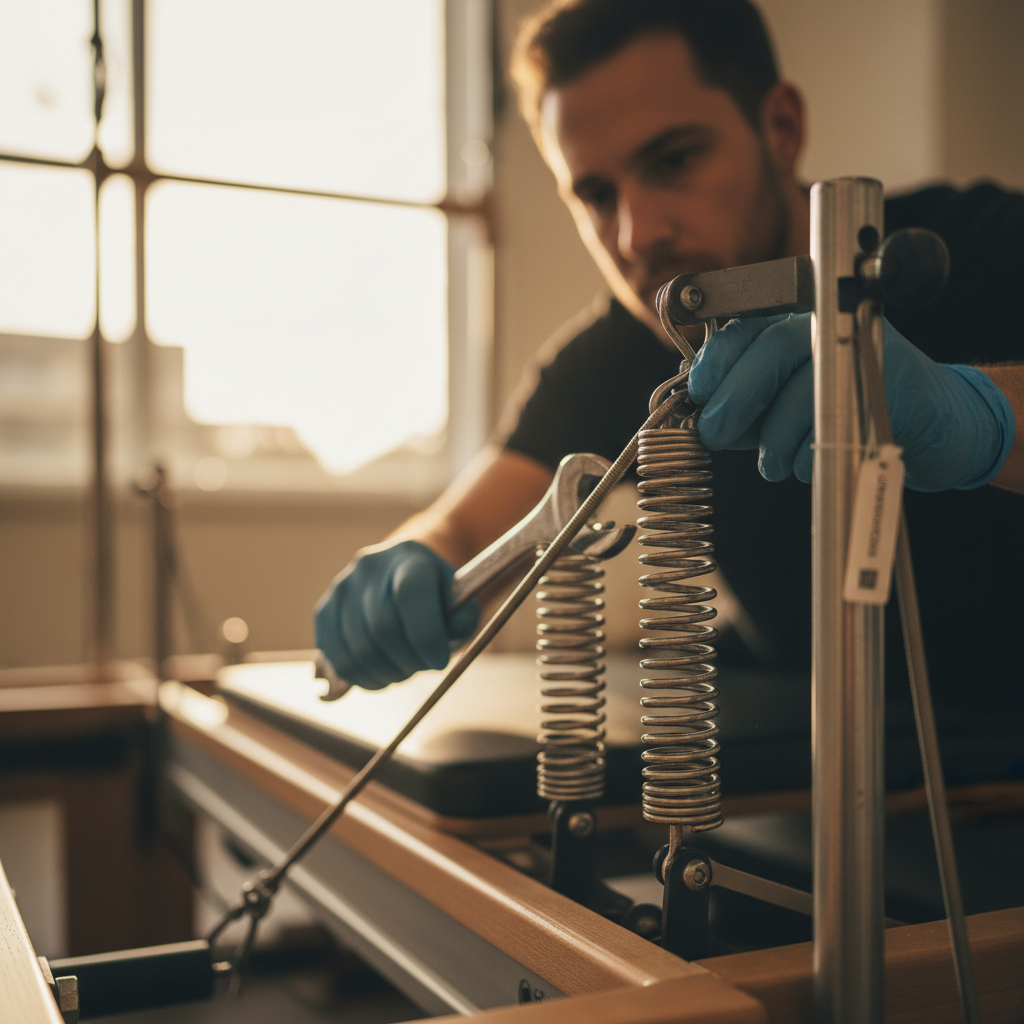
- Daily (before first class): Visual spring inspection for deformation, carriage wheel check, footbar locking verification, strap and loop fraying inspection
- Weekly: Lubricate carriage rails, test spring connections under light load, check headrest and shoulder rest adjustments, inspect rope and pulley systems
- Monthly: Full spring tension calibration, deep-clean upholstery and straps, check frame bolts, inspect all moving parts for wear patterns
- Annually: Professional service by a certified technician, spring replacement on high-use machines, full safety audit documented and signed
Every inspection gets logged. Date, time, inspector name, findings, corrective actions. A spreadsheet works. A dedicated app works better. What doesn't work: doing it from memory after someone gets hurt.
The Certification Gap That Voids Everything
Underwriters care deeply about who teaches on your equipment. Put an under-certified instructor on a reformer, and your professional liability coverage can vanish overnight. Insurers require:
- Comprehensive Pilates certification from BASI, STOTT, Balanced Body, Power Pilates, or Polestar. Weekend workshops and mat-only certs do not qualify
- 450 to 500 hours of training including observation, practice teaching, and supervised client hours on apparatus
- Current CPR and First Aid certification
- Continuing education: 16 to 20 hours annually to maintain credentials
Keep every instructor's certification, CPR card, and CE records on file. When a claim hits, your insurer asks for these documents before they ask for anything else.
The Five-Minute Intake That Prevents Five-Figure Lawsuits
Reformer work involves spinal flexion, extension, and rotation under resistance. For certain conditions, that's a recipe for catastrophe. Your intake form must flag:
- Osteoporosis or osteopenia (spinal flexion contraindicated)
- Recent surgery -- spinal, knee, or shoulder
- Pregnancy (modifications required, some exercises off-limits)
- Herniated or bulging discs
- Hypermobility conditions (spring tension demands careful management)
- Balance disorders or vertigo
Five minutes reviewing an intake form before a first session prevents injuries and demonstrates the due diligence that keeps your coverage intact.
The Math That Makes the Decision for You
One reformer injury with inadequate coverage: $15,000 to $75,000 in legal fees, settlements, and premium hikes. Studios dropped by their insurer after a claim face premiums 200 to 300 percent higher when they shop for a new carrier.
Doing it right? All three layers run $3,500 to $6,000 per year for a studio with 8 to 15 reformers. Participant accident protection adds $2 to $4 per class participant. For a studio running 25 classes per week at 8 people each, that's roughly $400 to $800 per month. Compare that to a single $40,000 claim.
Imagine Opening Monday With Every Gap Sealed
- Audit your current policy: Call your insurer. Ask whether spring-loaded resistance equipment and sliding carriage machines are explicitly covered. Written confirmation.
- Add professional liability: If your instructors aren't separately covered, fix that today
- Implement participant accident protection: Cover your clients' medical expenses and protect the relationships that keep your studio alive
- Start a maintenance log: Even a basic spreadsheet beats trusting your memory when an adjuster comes knocking
- Verify every instructor's credentials: Comprehensive apparatus certification, not just mat. No exceptions.
The equipment that makes reformer Pilates powerful is the same equipment that makes it risky. Invest in coverage, maintenance, and credentialing now -- or gamble everything on a spring that hasn't snapped yet.
Written by
Studio Operations Writer
Priya covers class optimization and revenue strategy for yoga and fitness studios. A former studio owner, she writes from hard-won experience about what actually moves the needle for boutique operators.
View all articles →Related Articles
Why you might like these

What Is Daily Event Insurance? The Complete Guide for Fitness and Adventure Businesses
Daily event insurance is same-day liability coverage that activates the moment a guest, member, or participant walks through your door. Here's how it works, who needs it, and why traditional annual policies leave a dangerous gap.

Event Insurance for Gyms: Every Coverage Question Gym Owners Actually Ask
From open gym sessions to fitness competitions, every event at your facility creates liability exposure your annual policy may not cover. This guide answers the questions gym owners ask most.

How to Choose an Event Insurance Provider: 7 Questions Every Fitness Business Must Ask
Not all event insurance platforms are built the same. Before you commit to any coverage provider, these seven questions will separate the platforms that actually protect your business from the ones that just take your money.