Paddleboard & Kayak Rental Liability: What Happens When Customers Get Hurt on the Water
Key Takeaways
- •84% of boating drowning victims were not wearing a life jacket -- PFD compliance is critical
- •Coast Guard regulations apply to commercial paddleboard and kayak rentals as vessels
- •Rental agreements must cover swimming ability, weather acknowledgment, and PFD receipt
- •Water sport accident protection at $8-$12 per rental covers the medical expense gap
A Scraped Knee vs. a Drowning. That's the Difference.
Someone falls off a rental bike and gets road rash. Annoying. Manageable. Someone falls off a rental paddleboard in open water and they can't get back on? That's a drowning risk. And that single distinction -- land versus water -- reshapes every aspect of how you run a rental business.
The U.S. Coast Guard reported 636 boating fatalities in 2024. Paddlecraft -- kayaks, canoes, paddleboards -- account for a growing share. Drowning caused 75% of fatal boating incidents. And 84% of those victims were not wearing a life jacket.
None of this means you should avoid the business. Paddleboard and kayak rentals grew 18% between 2022 and 2025. The demand is real. But so are the stakes.
Your Paddleboard Is a Vessel (And the Coast Guard Knows It)
Here's the thing most new operators miss. The U.S. Coast Guard classifies kayaks and paddleboards as vessels. If you rent them commercially, you're subject to federal boating regulations regardless of what your state says.
PFD Rules That Trip Up Even Experienced Operators
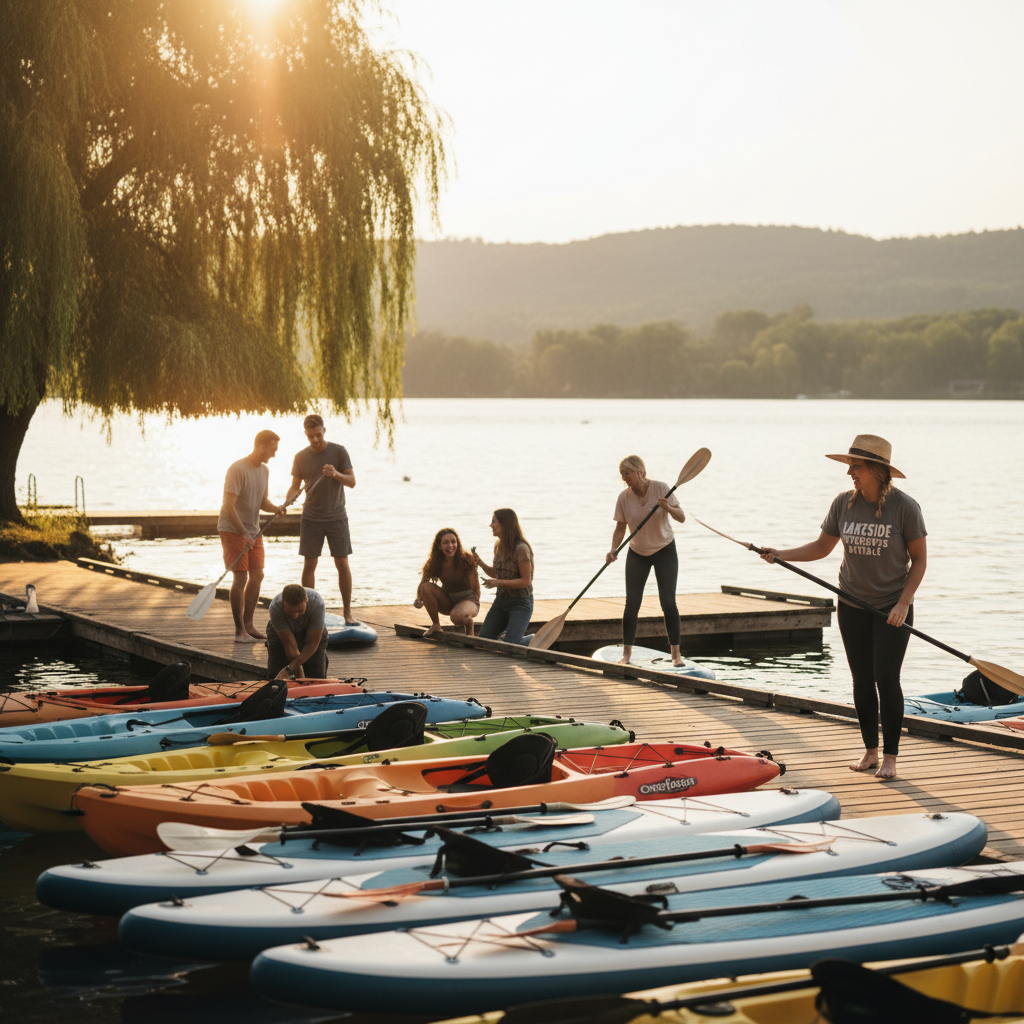
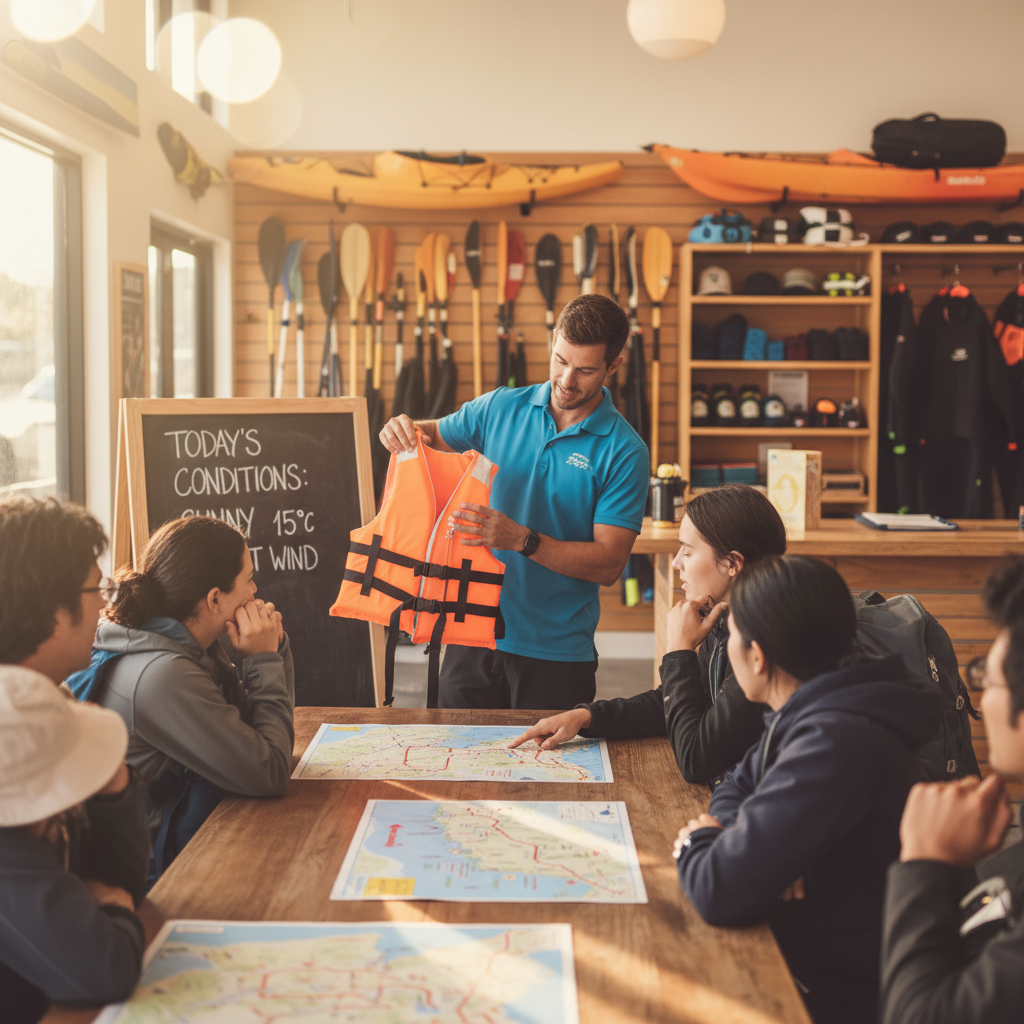
Federal law requires one Coast Guard-approved personal flotation device per person on every vessel. For SUPs and kayaks, that means every rental ships with a properly sized PFD. But the details are where operators get burned:
- PFDs must be the correct type for paddlesports (Type III is standard)
- Adult PFDs on children are non-compliant -- sizing matters
- PFDs must be in serviceable condition (no ripped fabric, broken buckles, degraded flotation)
- Children under 13 must wear their PFD at all times in most states
Providing a PFD is the minimum. Document that you provided it, demonstrated how to wear it, and recommended wearing it. If a renter drowns without a PFD and your records show you didn't provide one? You're facing criminal negligence charges, not just a lawsuit.
The $2 Whistle That Could Save Your Business
Vessels under 26 feet must carry a sound-producing device for distress signals. Attach a whistle to every PFD you rent out. Cost: about $2. Liability protection: immeasurable.
Lights for Late Paddlers
Trust us -- renters will stay out past sunset. Federal law requires a white light visible from all directions on any vessel operating after dark. Include a waterproof LED with every rental and require it for anything extending past 4:00 PM in winter months.
The Regulatory Layer Cake
Federal rules are the floor. States build on top. Common additions that catch operators off-guard:
- Commercial operator licensing: Some states require a commercial boat operator license for rental businesses
- Mandatory safety briefings: Florida, California, and Hawaii require documented briefings for all paddle sports renters
- Weather protocols: Coastal states may mandate written cancellation policies and real-time weather monitoring
- Leash requirements: Multiple states now require SUP riders to use ankle or coiled leashes, especially in tidal waters
- Restricted zones: Shipping channels, swimming areas, and marine habitats are off-limits
Check with your state boating authority and local harbormaster. Regulations vary wildly between inland lakes, rivers, coastal waters, and open ocean.
Your Rental Agreement Needs to Do Three Jobs at Once
For water sports, the rental agreement isn't just a waiver. It needs to function as a liability shield, a safety education tool, and a documentation system -- simultaneously.
Eight Elements You Cannot Skip
- Swimming ability confirmation: Require renters to confirm they can swim. Consider a basic swim test for open water or ocean rentals.
- Experience level self-assessment: Beginner, intermediate, experienced. Use this to steer equipment selection and route recommendations.
- Medical disclosure: Seizure disorders, cardiac conditions, medications causing drowsiness -- anything that increases drowning risk.
- Alcohol and substance policy: BUI (Boating Under the Influence) is a federal offense. State clearly: intoxicated renters are refused service.
- Weather and conditions acknowledgment: Wind, currents, tides, water temperature. Renter confirms they've been briefed on current conditions.
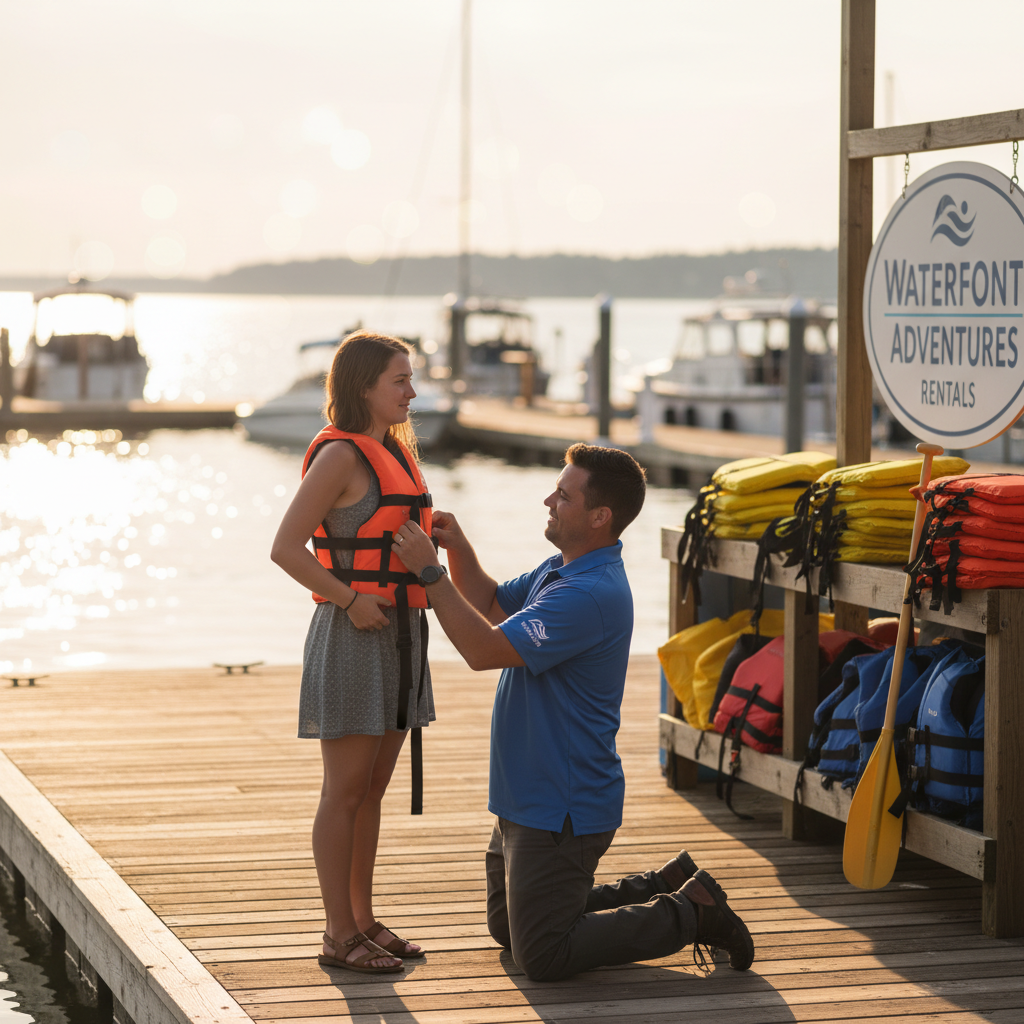
- PFD acknowledgment: Renter confirms receipt of a properly fitted PFD with usage instructions.
- Return time and boundary limits: Where they can go, where they can't, and when the equipment comes back.
- Assumption of risk: Specific to water activities -- drowning, hypothermia, marine life encounters, sudden weather changes.
Weather Changes Faster on Water Than You Think
A glassy morning lake develops whitecaps by noon. An offshore breeze that helps customers paddle out makes it nearly impossible to paddle back. Weather on water doesn't give warnings -- it gives surprises.
Non-Negotiable Weather Protocols
- Wind speed limits: No launches above 15 mph sustained winds. For beginners, the ceiling drops to 10 mph.
- Lightning policy: Zero rentals when thunderstorms are within 10 miles. Use a lightning detection app. Clear the water immediately if storms develop.
- Water temperature: Below 60 degrees F, hypothermia risk spikes dramatically for capsized paddlers. Require wetsuits or limit rental times in cold water.
- Current and tide awareness: Brief coastal and river renters on current conditions and tidal changes during their rental window.
Document every weather decision. "Closed due to 20 mph winds." "Operating with advisory: moderate chop, experienced paddlers only." If an incident ever lands in court, this log proves you were monitoring conditions and making responsible calls.
When Someone Doesn't Come Back on Time
Water emergencies are different from land emergencies. Time is more critical. Access is harder. Your response protocol must account for both.
Water Emergency Response Plan
- Immediate response: Staff with water rescue certification (lifeguard or swiftwater rescue, not just CPR) on duty whenever rentals are active.
- Rescue equipment on-site: Rescue board, throw bags, binoculars, VHF radio (Channel 16 for Coast Guard), first aid kit with hypothermia supplies.
- Communication system: Coast Guard on VHF Channel 16, or 911 for relay. Have your exact GPS coordinates ready to communicate immediately.
- Overdue renter protocol: 30 minutes past return time triggers a phone call. 60 minutes triggers a search. No exceptions.
Why Standard Insurance Leaves You Exposed on the Water
Commercial general liability covers your dock and basic operations. But water introduces exposure that standard policies were never designed to handle.
The Coverage Stack You Actually Need
- Commercial general liability: $1M per occurrence, $2M aggregate minimum. Dock slip-and-falls, property damage.
- Watercraft liability: Separate policy or endorsement for on-the-water incidents. Many CGL policies explicitly exclude watercraft.
- Equipment/hull coverage: Protects your rental fleet. Paddle sports gear takes a beating.
- Pollution liability: Required if you operate motorized watercraft or store fuel.
Total insurance costs for a paddle sports rental: $8,000-$18,000 per year depending on location, fleet size, and claims history.
The Question Nobody Asks: Who Pays the Customer's Medical Bill?
Your liability insurance protects your business. Your watercraft policy protects your equipment. But what about the paddler who capsizes in choppy water, swallows a lungful, and ends up in the ER for observation?
That's a $4,000-$7,000 medical bill. Your insurance won't pay it. Their health plan might carry a $3,000 deductible. Now they're out thousands of dollars, furious, and telling everyone they know about their "terrible experience" with your company.
Renter accident protection changes everything. Add $8-$12 to every rental, include automatic accident coverage, and tell customers: "Every rental includes water sport accident protection. If anything happens out there, you're covered."
Families booking vacation rentals love this. You earn a commission on the protection, cover the scenarios that generate lawsuits and one-star reviews, and differentiate yourself from competitors who hand over a paddleboard and hope for the best.
The Ten-Minute Morning Ritual That Protects Everything
Use this checklist before every operating day:
- Check weather forecast and set operating conditions
- Inspect all rental equipment: hulls, paddles, fins, leashes
- Inspect all PFDs: flotation, buckles, straps, sizing inventory
- Verify rescue equipment is accessible and functional
- Confirm staff rescue certifications are current
- Brief staff on conditions: wind, tides, water temp, hazards
- Test communication systems: VHF radio, cell phones
- Verify accident protection system is active for the day's rentals
Print it. Laminate it. Run through it every single morning. Ten minutes of your time. The cheapest liability protection money can buy.
Written by
Equipment Industry Writer
Jamie covers liability and business strategy for equipment rental operations. Her writing helps rental shop owners understand their unique risk exposures and build businesses that can weather both busy seasons and slow ones.
View all articles →Related Articles
Why you might like these

Rental Equipment Damage: Who Pays When Customers Break Your Gear?
Equipment damage is the cost of doing business in rentals. But there's a smarter way to handle it than endless arguments with customers.

Personal Trainer Liability: What Every Gym Owner Needs to Know About Contractor Coverage
Independent contractor trainers create a dangerous liability gap most gym owners don't discover until someone gets hurt. Here's how to close it before it costs you.
How Ski Rental Shops Are Boosting Profit Margins in a Competitive Market
Ski rental margins are getting squeezed by online competitors and resort shops. Here are four strategies to protect and grow your profitability.