

General Liability vs. Participant Accident Insurance: The Coverage Gap That Costs Businesses Thousands
Key Takeaways
- •General liability protects your business from lawsuits but does NOT pay injured participants' medical bills
- •Participant accident insurance covers medical expenses directly, regardless of fault, with no lawsuit required
- •The coverage gap exists across every activity vertical: gyms, climbing, adventure, rentals, studios, races, and wellness
- •Waivers protect against lawsuits but do nothing to cover medical bills or preserve customer relationships
- •Accident coverage at $3,600-$4,800/year can save $7,500-$11,000+ in retained member revenue annually
The Kettlebell Slips at 6:30 PM on a Tuesday
A metatarsal fractures. Jennifer -- six-year member, never missed a month -- is in the ER before the class finishes its cool-down. Mark, the gym owner, runs a clean operation. Certified coaches. $4,200 a year in general liability premiums. Zero prior incidents.
Then Jennifer calls from the orthopedist's office. "Your insurance will cover this, right?"
Mark calls his insurer. They explain, patiently, that his GL policy protects the gym from lawsuits. It does not pay Jennifer's $14,300 in medical bills. Jennifer's health insurance carries a $5,000 deductible. She's personally out five thousand dollars from an injury at Mark's gym.
Jennifer doesn't sue. She does something worse. Cancels her membership. Posts a detailed one-star Google review. Tells her entire social circle that Mark's gym "refused to help." Mark loses Jennifer, three of her friends, and an unknowable number of prospects who read that review at 11 PM while choosing a gym.

The Part of Your Policy You've Never Actually Read
General liability is the foundation of every activity-based business. You need it. But you need to understand exactly where the foundation ends and the cliff begins.
What GL Actually Covers
- Third-party bodily injury claims: Someone sues alleging negligence. GL pays legal defense, settlements, judgments
- Property damage claims: Your operations damage someone else's property
- Premises liability: Slip-and-fall, tripping hazards, premises incidents
- Products liability: A product you sell or provide causes injury (critical for rental businesses)
- Personal and advertising injury: Libel, slander, copyright infringement
What GL Quietly Refuses to Touch
Here's where the money disappears:
- The injured person's medical bills. GL does not write checks for ER visits, surgery, or physical therapy. It only activates when someone sues and proves negligence
- Injuries where you did nothing wrong. A member hurts themselves doing an exercise correctly, on perfect equipment, with a qualified instructor present. No negligence exists. But they still have a $7,000 bill and nobody to send it to
- Employee injuries. Workers' comp -- separate policy entirely
- Professional errors. Professional liability or E&O -- another separate policy
The Product That Fills the $14,000 Hole
Participant accident insurance -- sometimes called accident medical coverage or ActiveGuard protection -- does one thing your GL never will: it pays the injured person's medical bills directly, regardless of who was at fault.
Four Steps. Zero Lawyers.
- Participant gets injured during an activity at your business
- They seek medical treatment
- They file a claim with the accident insurance carrier
- Carrier pays covered medical expenses up to the policy limit
No lawsuit. No fault determination. No months of legal ping-pong. The participant's bills are handled. Your business avoids the fallout of an angry, financially wounded customer.

What Gets Covered
- Emergency room visits and urgent care
- Physician and specialist visits
- X-rays, MRIs, diagnostic imaging
- Surgery and hospitalization
- Physical therapy and rehabilitation
- Ambulance transport
- Dental treatment for injury-related damage
Limits typically range from $10,000 to $100,000 per incident. For most activity businesses, $25,000 per incident covers the vast majority of injuries.
Six Industries. One Identical Gap. Watch It Repeat.
Climbing Gyms
Youth climber falls from a bouldering wall. Fractured wrist. Medical bills: $8,500. The gym's GL protects against a lawsuit if parents sue. But the parents are staring at $3,000 to $5,000 out-of-pocket for their kid's injury. A signed waiver doesn't dissolve that anger.
Adventure Guide Services
Client on a guided mountain bike tour hits a rock, goes over the handlebars. Separated shoulder. Bills: $11,200. The company followed every protocol. Zero negligence. But the client -- visiting from out of state, on vacation -- now associates your brand with an $11,000 surprise.
Equipment Rental Shops
Tourist rents a paddleboard, falls, hits their head on the board. Concussion protocol at the local ER: $4,800. They wanted a fun afternoon. Now they're arguing with their insurer about an out-of-network visit in a town they'll never see again.
Yoga and Fitness Studios
New student in hot yoga faints from dehydration, falls, cracks their head on the floor. CT scan plus observation: $6,200. The studio did nothing wrong. The student didn't hydrate. But $6,200 needs to come from somewhere.
Race Events
Runner collapses at mile 9 with exertional heat stroke. Ambulance plus ER: $18,000. Water stations every two miles. Medical personnel on course. Zero negligence. Five-figure bill landing on the participant.
Wellness Centers
Adverse reaction during cryotherapy. Emergency evaluation: $5,300. All screening protocols followed. Unpredictable reaction. Nobody expected to leave a wellness appointment via ambulance.
Your Waiver Doesn't Fix This (And Here's Why)
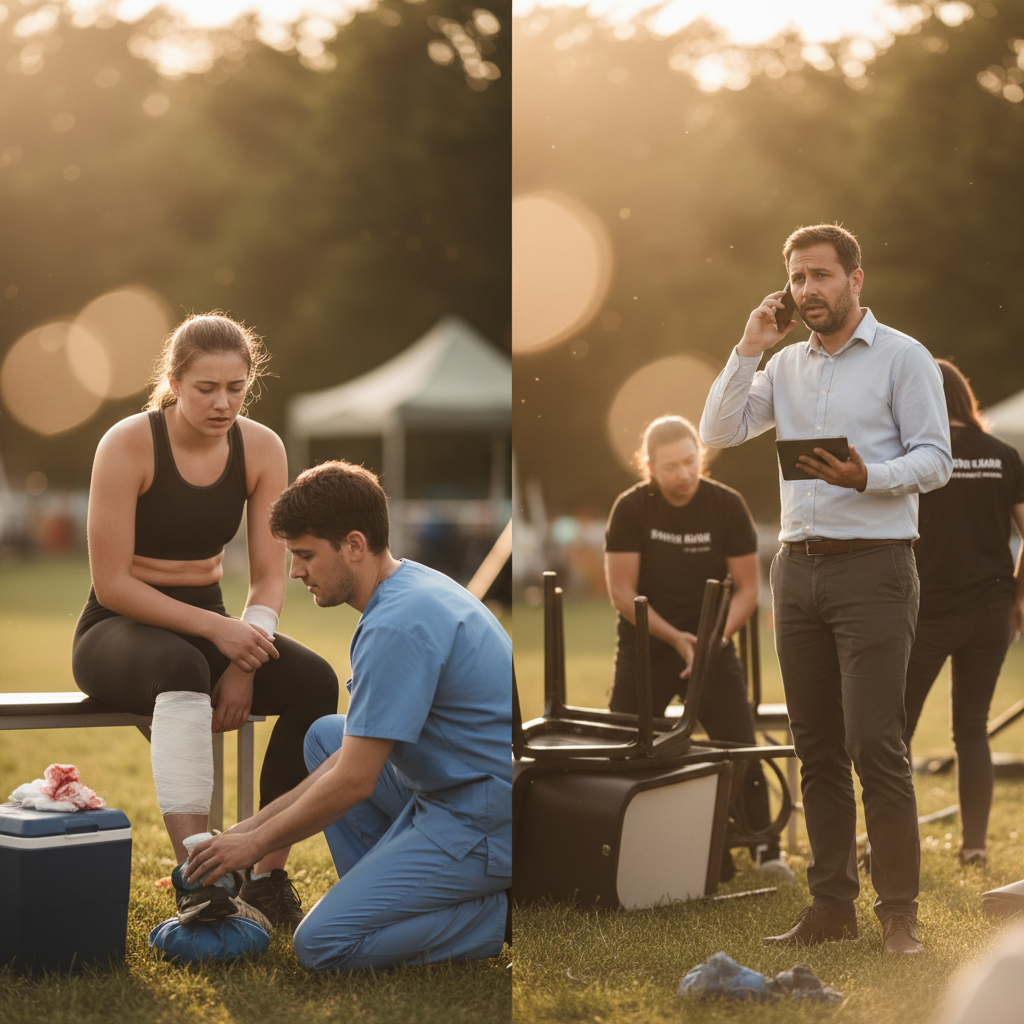
A waiver might protect you from being sued. Enforceability varies wildly by state. But a waiver does absolutely nothing to pay the injured person's medical bills.
Put yourself in their shoes. They signed a waiver. They got hurt. Now they have a $9,000 bill. The waiver tells them they can't sue. It doesn't tell them who pays for the X-rays, the specialist, or the eight weeks of physical therapy. The anger stays. The review gets posted. The membership gets canceled.
Waivers protect your legal liability. Participant accident insurance protects the relationship.
The Numbers That End the Argument
Mid-size gym. 400 members. 50 drop-ins per month. Two futures.
Future A: GL Only
- Annual GL premium: $3,500
- Injury incidents per year: 8 to 12
- Average medical cost per incident: $4,200
- Members lost per incident: 1.5 (injured person plus their circle)
- Revenue lost per departed member: $720/year
- Annual revenue impact: $8,640 to $12,960
- Plus: negative reviews, reputation erosion, potential lawsuits
Future B: GL Plus Accident Coverage
- Annual GL premium: $3,500
- Annual accident coverage: $3,600 to $4,800
- Same injury incidents: 8 to 12
- Medical bills covered: 100% up to policy limits
- Members lost per incident: 0.2 (most stay when bills are handled)
- Annual revenue impact: $1,152 to $1,728
- Plus: positive reviews, stronger retention, referral boost
Accident coverage costs $3,600 to $4,800 per year. It saves $7,488 to $11,232 in retained revenue. Before counting avoided lawsuits, avoided reputation damage, and the word-of-mouth from members who felt genuinely cared for.
Three Models. Pick One Today.
Per-Visit Coverage
Activates automatically every visit. $1 to $4 per participant. Best for high drop-in traffic or variable attendance -- the model most gyms, studios, and climbing facilities use with Daily Event Insurance.
Per-Event Coverage
Purchased for specific events: competitions, races, workshops. Cost scales with participant count and risk. Ideal for race events and one-time activities.
Annual Coverage
Blanket protection for all participants year-round. Predictable cost, simple administration. Best for businesses with consistent daily attendance.
Two Policies. One Decision That Changes Everything.
General liability protects your business from lawsuits. Participant accident insurance protects your customers from medical bills. You need both. Full stop.
The businesses that understand this distinction build stronger relationships, earn better reviews, retain more customers, and sleep soundly knowing that when the inevitable injury happens -- everyone is taken care of. The businesses that rely on GL alone keep learning the lesson the hard way. One angry, injured customer at a time.
Written by
Insurance Specialist
Alex breaks down insurance requirements for climbing and adventure businesses in plain language. He has spent years working with insurance carriers and business owners to find coverage solutions that actually match real-world risks.
View all articles →Related Articles
Why you might like these
What Is Daily Event Insurance? The Complete Guide for Fitness and Adventure Businesses
Daily event insurance is same-day liability coverage that activates the moment a guest, member, or participant walks through your door. Here's how it works, who needs it, and why traditional annual policies leave a dangerous gap.
Event Insurance for Gyms: Every Coverage Question Gym Owners Actually Ask
From open gym sessions to fitness competitions, every event at your facility creates liability exposure your annual policy may not cover. This guide answers the questions gym owners ask most.

How to Choose an Event Insurance Provider: 7 Questions Every Fitness Business Must Ask
Not all event insurance platforms are built the same. Before you commit to any coverage provider, these seven questions will separate the platforms that actually protect your business from the ones that just take your money.